01/09/2019 15/03/2022
Closed
URGE, an abbreviation for 'circular building cities' is an Action Planning network on circular economy in the construction sector - a major consumer of raw materials. As there is a gap in circular economy principles' implementation in this sector, URGE brings together nine cities and their stakeholders to inspire and learn from each other in developing their integrated urban policy. This supports integration of circularity in the construction tasks, thus contributing to sustainable cities.
Summary
Partners
Lead Partner : Utrecht - Netherlands- Copenhagen - Denmark
- Granada - Spain
- Kavala - Greece
- Munich - Germany
- Nigrad d.o.o - Slovenia
- Oeste CIM - Portugal
- Prato - Italy
- Riga - Latvia
Timeline
- Phase 1: Kick-off and finalization meetings in Utrecht (NL) and Copenhagen (DK) (2019-2020)
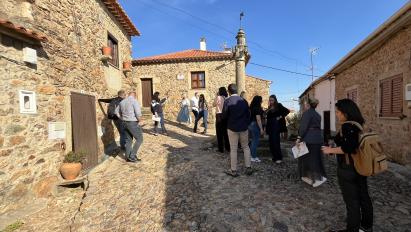
- Phase 2: Online transnational exchange meetings hosted by Munich (DE), Prato (IT), Oeste (PT), Copenhagen (DK), Riga (LV) and Maribor (SI) (2020-2021)
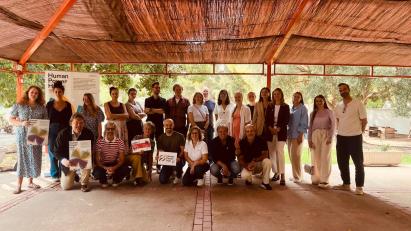
- Phase 2: Coordination meetings in Granada (ES) and Kavala (EL) (2022)
- Phase 2: Final event in Utrecht (NL) (2022)
Network Outputs
-
urge_case_study_booklet._pdf.pdf(PDF, 4Mo)
-
urge_thematic_article_booklet_0.pdf(PDF, 6Mo)
-
urge_interview_booklet.pdf(PDF, 2Mo)
-
URGE APN final product(PDF, 42Mo)