
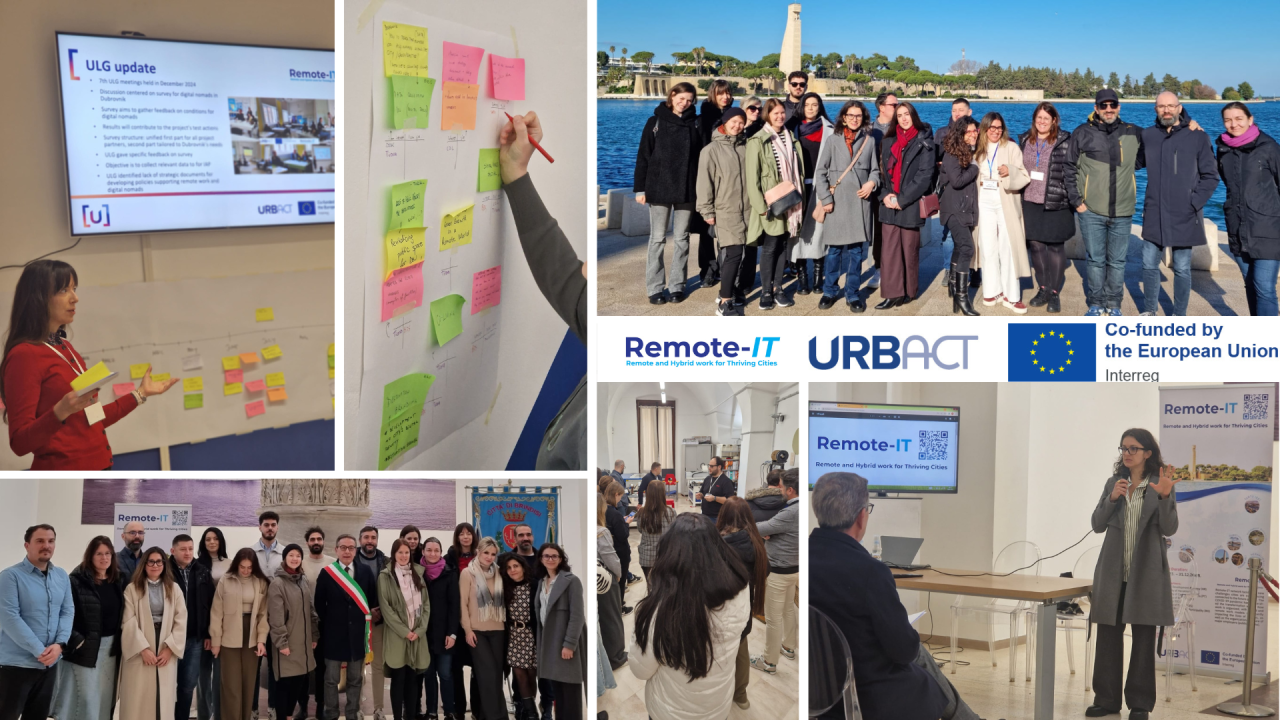
Where cities started: high awareness, low readiness
The Remote-IT Baseline Study, developed in early 2024, captured a paradoxical situation across the partner cities. On one hand, all cities were already experiencing the effects of remote and hybrid work. On the other, none had a coherent policy framework to address it.
The baseline identified two interconnected dimensions of “remote work preparedness”:
- the external dimension, concerning the attraction, integration, and retention of remote workers and digital nomads; and
- the internal dimension, concerning how public administrations themselves adapt to hybrid work, digital collaboration, and new management cultures.
Across both dimensions, the baseline showed similar patterns. Cities lacked:
- clear data about remote workers and their needs,
- defined governance structures for cross-sectoral coordination,
- tested instruments for attraction and integration,
- internal guidelines for hybrid work in municipal administrations,
- shared language for discussing these changes.
This starting point shaped the network’s core question: not “how do we attract more remote workers?”, but rather “how can cities build long-term readiness for new forms of work in a way that is economically beneficial, socially inclusive, environmentally responsible, and institutionally sustainable?”
What cities tested and learned
Bucharest District 6: testing needs before building infrastructure
In March 2025, Bucharest District 6 organised a Testing Action at Impact Hub Bucharest, bringing together remote workers and digital nomads to explore their real needs and perceptions. The session combined facilitated discussion with the filming of video testimonials and the production of a promotional clip for District 6 and Bucharest.
The action confirmed several critical insights:
- The city was not yet perceived as attractive for digital nomads, due to limited green spaces, lack of public amenities such as drinking fountains, insufficient pedestrian-friendly areas, and weak information resources.
- Participants strongly emphasised the need for cozy, accessible, well-equipped coworking spaces, but even more so for active community-building and integration mechanisms.
- Visibility alone was not enough; it had to be paired with real improvements in urban experience.
These findings directly informed the IAP’s priorities on infrastructure, community building, and branding.
Câmara de Lobos: testing innovation through the Innovator in Residence programme
Câmara de Lobos integrated its testing into an Innovator in Residence programme implemented in July 2024. Rather than testing a single service, the city tested a methodology- whether short-term international residencies could catalyse local innovation, political buy-in, and community engagement.
The programme involved ULG meetings, co-creation sessions, field visits, and stakeholder interviews. It resulted in three specific initiatives included in the IAP:
- an Innovative Compensation Scheme based on societal tokens to support local experiences and farmers,
- a pilot on technology for sustainable local food chains,
- and the scaling of the Innovator in Residence programme itself into an annual two-month format.
The testing demonstrated proof of concept, built political and public trust, activated the ULG, and introduced a more agile, risk-tolerant culture within the administration.
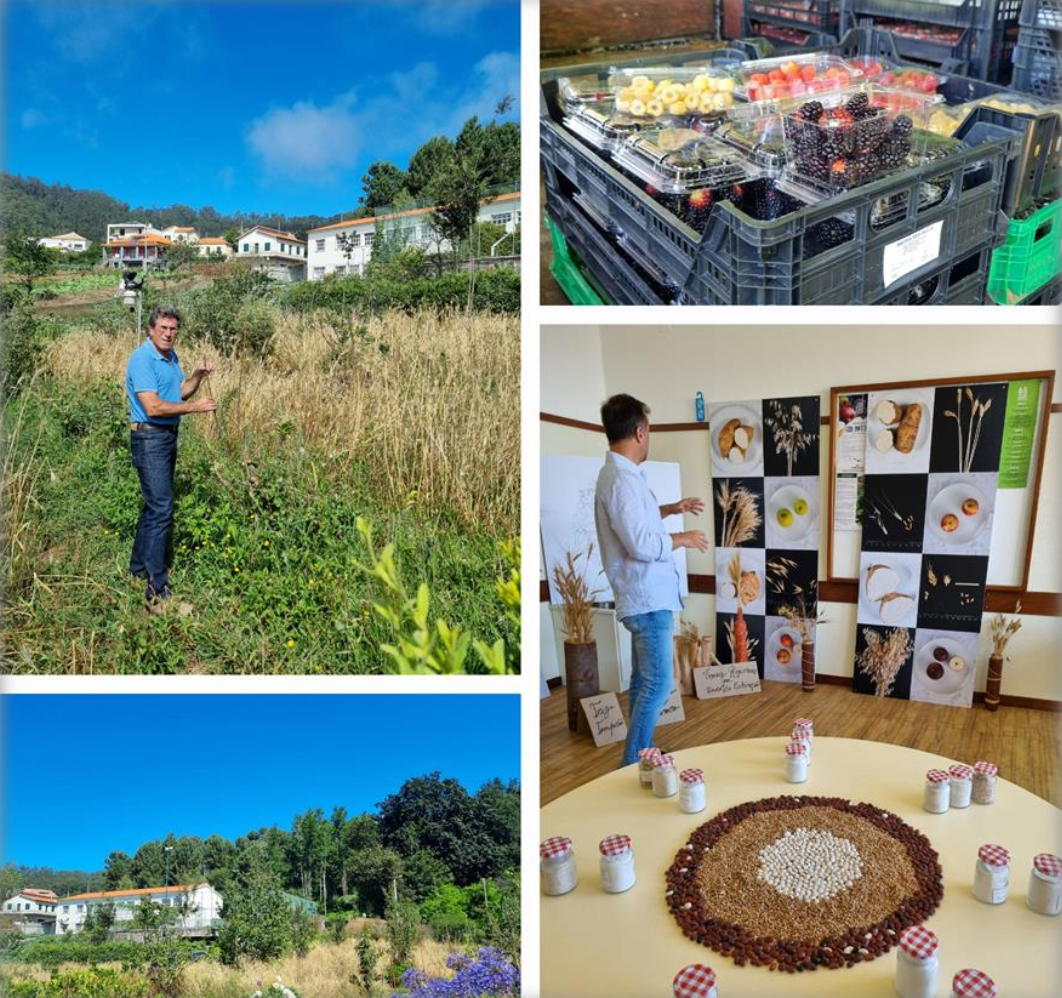
Photo: Camara de Lobos, testing action
Brindisi: testing attraction through a curated pilot experience
Brindisi tested attraction directly by designing and promoting a one-month curated stay package for digital nomads in spring 2025, with a limited promotional budget.
Despite significant online visibility and interest, the pilot resulted in no confirmed arrivals. This “failure” proved highly valuable. It showed that:
- the digital nomad market is saturated and selective,
- logistics and partnerships must be secured well in advance,
- accommodation and pricing are decisive,
- and organic reach is no longer sufficient without targeted investment.
These lessons reshaped Brindisi’s approach, shifting focus from marketing alone to ecosystem readiness and service integration.
Other cities
- Dubrovnik tested physical and social spaces for integration through the Offline Space at the TUP Factory and targeted marketing campaigns, linking remote work with creative industries and year-round tourism.
- Heraklion tested a digital nomad microsite and a soundproof work booth, confirming both infrastructure gaps and the importance of visibility.
- Murcia tested internal hybrid work pilots and the activation of municipal spaces for remote work, linking remote work to creative industries and smart city strategies.
- Tartu tested internal transformation through training platforms, hybrid work guidelines, and monitoring tools, focusing primarily on the public administration as employer.
- Tirana tested community building and branding through its Digital Nomad Festival, Bibliotech coworking pilot, and readiness studies.
Each city tested differently, but all used testing as a way to reduce uncertainty, build consensus, and inform strategic choices.
What changed in cities
By the end of the network, the most important change was not a specific infrastructure project or marketing campaign, but a shift in how cities understand their role.
Cities moved:
- from viewing remote work as an external trend to seeing it as a cross-cutting urban issue,
- from isolated actions to integrated strategies,
- from assumptions to evidence,
- from reactive responses to proactive governance.
Remote work became linked to housing, mobility, climate, tourism, labour rights, digital inclusion, and community cohesion. This integration is reflected in all IAPs.
The playbook as collective knowledge
The Remote-IT Digital Playbook captures this collective learning in 22 entries, covering the full spectrum from definitions to governance tools:
- conceptual foundations such as Who is the remote worker? and From office to anywhere,
- strategic themes such as destination branding, talent attraction, incentives, sustainable tourism, and environmental sustainability,
- governance and organisational themes such as managing creative hubs, internal transformation, gender equality, and digital readiness,
- and practical tools such as user journeys, personas, templates, and recommendations.
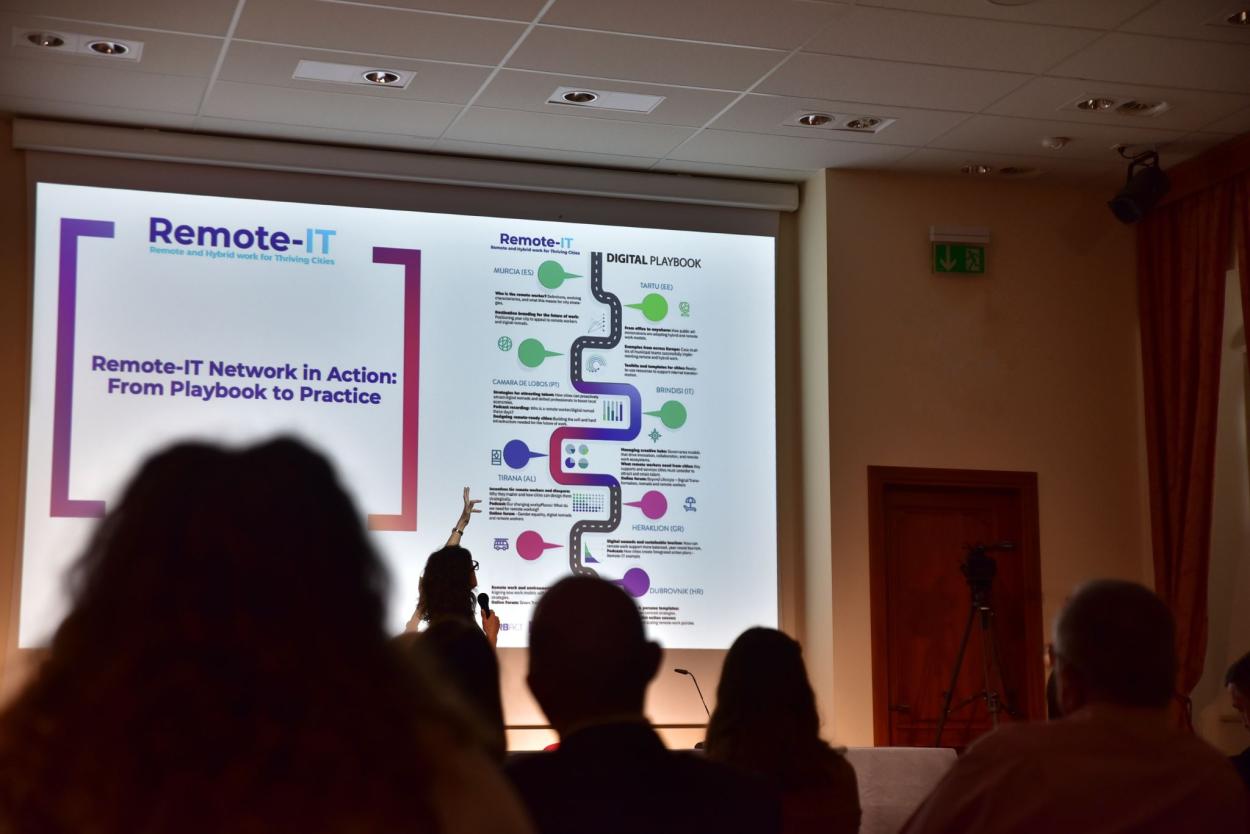
Photo: Presentation of the Remote-IT Playbook during the final event it Dubrovnik, Croatia
Each entry responds directly to a real challenge identified by cities and tested in practice. The playbook does not present abstract models- it documents lived experience, translated into usable guidance.
Why this matters beyond the network
Remote-IT demonstrates that cities can shape the future of work rather than merely adapt to it. But doing so requires:
- integrated thinking across policy domains,
- participatory governance,
- willingness to test and learn,
- and institutional commitment.
The network shows that readiness is not about being “attractive” in a marketing sense, but about being capable: capable of hosting new forms of work in ways that strengthen local economies, support communities, respect environmental limits, and protect workers’ rights.
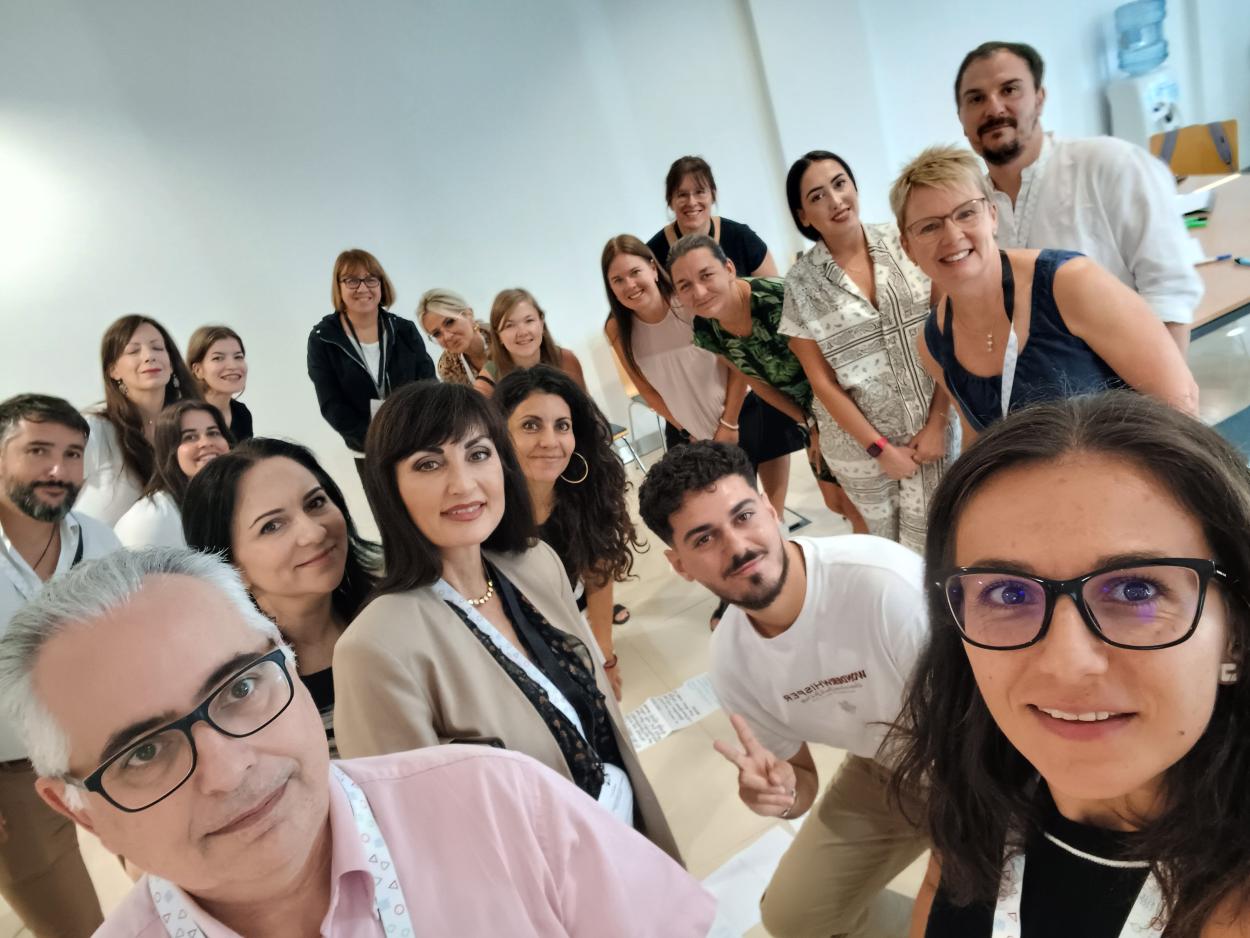
Photo: Remote-IT team during transnational meeting in Camara de Lobos
Remote-IT started as an exploration of remote and hybrid work. It ended as a transformation of how cities think about work, place, and governance. The eight partner cities did not agree into one model. Instead, they developed eight context-specific strategies grounded in a shared understanding.
For other cities now facing similar challenges, Remote-IT offers not a blueprint, but a pathway: start with questions, test before scaling, involve stakeholders, integrate across sectors, and build readiness as a long-term public good.