6582 results

  • Urban Sanitation Beyond the Sewer Network

    Many small and medium-sized cities across Europe face a similar challenge: parts of their urban or peri-urban areas are still not fully served by public sewerage systems, while households rely on septic tanks or other individual wastewater solutions that are often poorly recorded, insufficiently monitored, and difficult to manage in a coordinated way. This creates growing risks for groundwater, soil, public health and environmental compliance.


  • Edible Commons

    The city of Ferrara is looking for potential Lead Partner and Partners for a project aiming to tackle food poverty in urban disadvantaged areas by bringing people closer to fresh food and raising awareness about the importance of food quality, as well as enabling urban auto-production for most fragile citizens.
  • Living heritage: Resident-Centered Governance for Sustainable Tourism in Small Heritage Cities Under Pressure

    TOPIC


  • Local Dialogue Lab

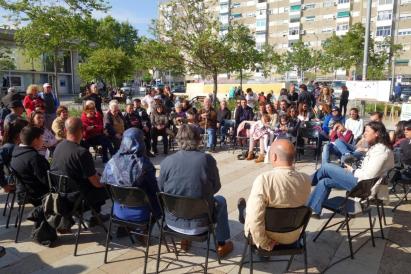
    Over the past five years, public participation and consultation have gradually taken on an increasingly important role. Initially viewed as regulatory obligations or isolated initiatives, they are gradually becoming a key factor in the development of projects. This evolution has contributed to a shift in the perception of participation: from a constraint to be managed, it is increasingly seen as a means of improving projects. 

  • Prototyping inclusive urban solutions that improve the quality of life, with particular emphasis on the perspectives of young people

    We are seeking a leader and partners for a project focused on the practical testing of solutions, co-creation, and development of social innovations in urban spaces.

    We are interested in prototyping inclusive urban solutions that enhance the quality of life, with a focus on the perspectives of young people.

    Furthermore, we aim to exchange experiences and run pilot and experimental activities, such as:

  • Education in the field of mobility and electromobility - a chance to change habits

    A few years ago, we developed the "Electromobility Development Strategy for the City of Zduńska Wola until 2035." The document stipulates that we will conduct educational and informational activities for residents on mobility and electromobility. However, it's difficult to act without a clearly defined plan. That's why we have an idea for a project! We are looking for cities that would like to create a network to jointly develop such a plan.

  • Articles

    Mesta >> mestom: Naravni ukrepi zadrževanja vode

    Podnebne spremembe se na lokalni ravni vse pogosteje kažejo kot skrajni vremenski pojavi. Intenzivne padavine, vročinski valovi in suše postajajo nova realnost, ki terja drugačen pristop k urejanju

  • FamilyLab: Rethinking Territories Through Family-Centred Policies

    Across Europe, many local territories, particularly small and medium-sized places outside major urban centres, face a persistent structural challenge. They offer high quality of life, safety and strong environmental and community assets, yet continue to experience demographic decline, ageing populations and limited economic dynamism. At the same time, smaller urban areas near large metropolitan centres often struggle to capture investment, talent and population.
     

  • OpenHeritage

    Across many European cities, valuable cultural heritage remains physically confined within local museums and archives, limiting access for residents with disabilities, people living in remote areas, young audiences, and those who are unable to visit in person. At the same time, many local cultural assets remain insufficiently digitised, creating risks for long-term preservation and reducing their educational and social impact.

  • Digital Dignity: Inclusive Governance for All

    Our community aims to transform its official web resource from a mere news source into an inclusive ecosystem where every resident, regardless of physical or cognitive abilities, has equal access to municipal services. By implementing the Ukrainian adaptation of the European accessibility standard (EN 301 549) and WCAG 2.1 guidelines, we are building a foundation for digital dignity and seamless interaction between local government and society.